One year of the Labour Codes: a 10-point health check for MSME owners
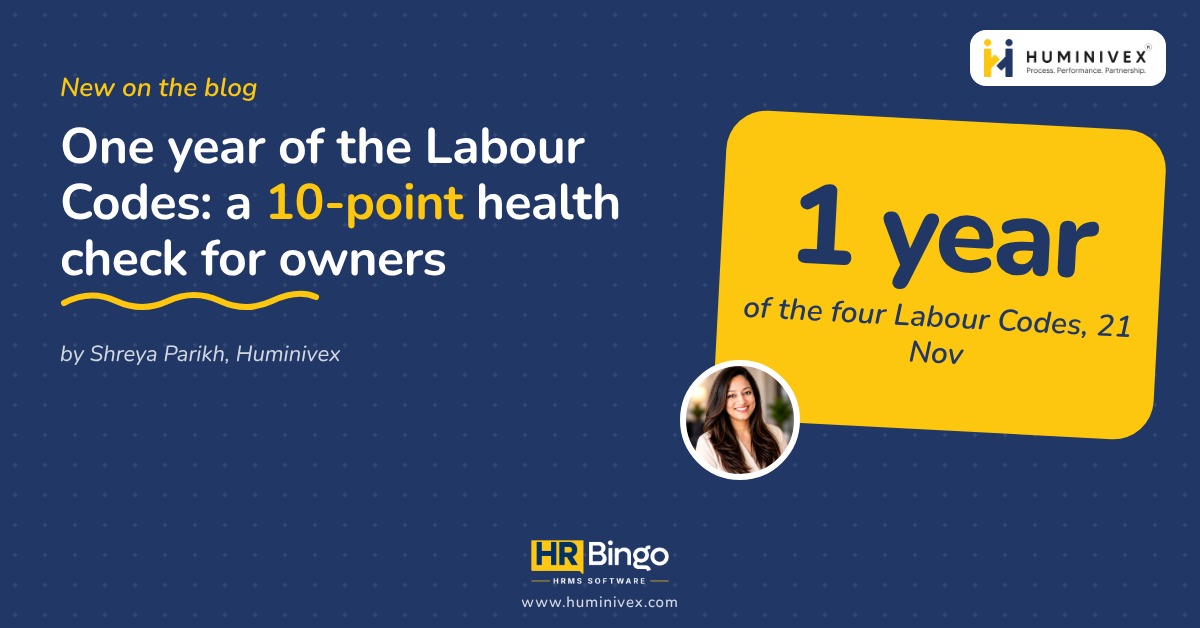
Exactly one year ago, on 21 November 2025, India brought the four Labour Codes into force. Twenty-nine central labour laws were folded into four: Wages, Social Security, Industrial Relations, and Occupational Safety, Health and Working Conditions.
Then, on 8 May 2026, the Central Rules under all four Codes were notified. That was the moment the Codes moved from “something to read about” to “something you have to do”.
So here is an honest question for every business owner reading this:
Has anything in your HR actually changed in the last twelve months?
In most MSMEs we visit, the answer is “not really”. The appointment letter is the same. The salary structure is the same. Attendance is still on a register or a WhatsApp group. And everyone is hoping no inspector asks.
The good news: getting in shape is not a giant project. It is a checklist.
The 10-point health check
Score yourself honestly. One point for every “yes”.
1. Every employee has a written appointment letter.
Not just senior staff. Everyone, including your supervisors, drivers and office boys.
2. Your salary structure follows the new definition of wages.
If allowances make up most of the salary and basic is kept deliberately low, it is time to re-check. This affects PF, gratuity and bonus.
3. Wages are paid on time, every month, with a payslip.
A fixed pay date and a clear payslip are simple and protect you in any dispute.
4. Your PF and ESIC coverage is up to date.
Especially after the PF wage ceiling moved to ₹25,000 in September 2026. Many employees who were outside PF are now inside it.
5. Working hours, overtime and leave are written in a policy.
And the policy matches what actually happens on the floor.
6. You have a simple attendance record you can show.
Biometric, app or register, as long as it is complete and matches payroll.
7. Your contract and outsourced staff are covered.
Ask your contractors for their registrations and challans. If they don’t comply, the risk often comes back to you.
8. You have written standing orders or a basic HR policy handbook.
The Codes expect clear, written rules on conduct, discipline and grievances. A 10-page handbook is enough for most small companies.
9. Your POSH committee exists and people know about it.
If you have 10 or more employees, an Internal Committee is not optional. Neither is awareness.
10. Someone owns compliance, with a monthly calendar.
PF on the 15th, returns on time, registers updated. If “everyone” owns it, nobody does.
How did you score?
- 9 to 10: You are ahead of most businesses your size. Keep it running.
- 6 to 8: Good base, a few gaps. Fix them before they turn into notices.
- 5 or less: You are running on luck. That’s common, and very fixable, but don’t leave it for another year.
Why owners keep putting this off
It is rarely about money. It is usually three things:
- No one has time to read the Codes and translate them into “what do we do on Monday”.
- Everything lives in different places: Excel for salary, a register for attendance, a drawer for letters.
- Fear of opening the box: “What if we find something?”
That’s exactly where systems help more than speeches. When attendance, leave, payroll and letters live in one HRMS like HR Bingo, half of this checklist is handled every month automatically, and the other half becomes a one-time setup.
What we do in a Labour Codes health check
At Huminivex we sit with the owner and the person who handles HR or accounts, and in about two hours we:
- go through all 10 points above with your actual documents,
- mark each one green, amber or red,
- give you a one-page action plan with owners and dates,
- and share ready templates for appointment letters, policies and SOPs where you need them.
No 80-page report. Just what to fix, in what order.
Your turn
What was your score out of 10? You don’t have to tell anyone, but do tell yourself.
If it was below 8, DM us or connect with us to know more, or reach us through www.huminivex.com.
This article is general guidance for business owners, not legal advice. Labour law rules also depend on your state and type of establishment, so please confirm specifics with your HR or compliance advisor.
Sources: Petpooja compliance guide 2026, DSK Legal on Mondaq (14 May 2026), Protium, HR Online, IndiaLaw LLP.
Want help putting this into practice in your business?
Book a free consultation