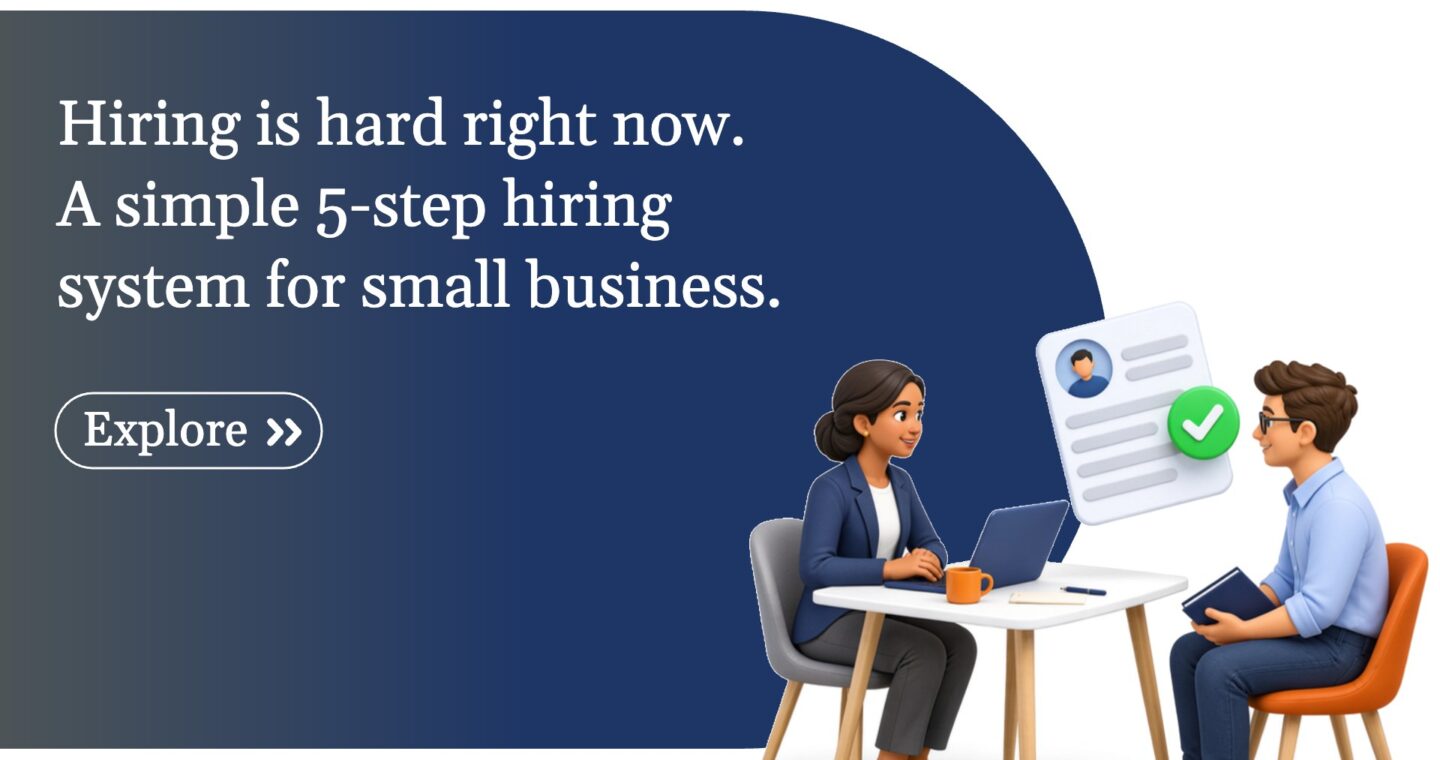
Hiring is hard right now. A simple 5-step hiring system for small businesses
Diwali is done. Bonuses are paid. And on Monday morning, two chairs in your office are empty.
If that sounds familiar, you’re not alone. The post-festive weeks are when many small businesses discover who has quietly moved on, and suddenly every vacancy feels like an emergency.
The bigger picture isn’t any easier. TeamLease’s Employment Outlook Report, released in September 2026, surveyed 1,239 employers across 23 industries and 20 cities. 72% of employers who are hiring expect moderate to significant difficulty filling roles in the second half of this financial year. TeamLease described the shift as “precision hiring rather than volume-led recruitment”. In plain words: companies want the right person, not just a person.
For a small business, a wrong hire hurts more than for a big company. One wrong person in a team of fifteen affects customers, other employees and your own time. So rushing is the most expensive thing you can do.
The good news: you don’t need an HR department to hire well. You need a simple system. Here’s the one we set up with owners.
Step 1: Write the role in outcomes, not adjectives
Most job descriptions in small businesses are copied from Google or from last year. “Hard-working, good communication, team player.” That tells a candidate nothing, and tells you nothing when you are deciding.
Instead, answer three questions:
- What should this person deliver in week 1?
- What should they own by month 1?
- How will you know they are doing well at month 6?
Example for an accounts executive: week 1, learn the billing process and clear pending entries; month 1, handle all vendor payments on time; month 6, monthly closing done by the 5th without the owner checking every line.
Now you know exactly who you need, and the candidate knows what success looks like.
Step 2: Ask your own team first
Before you post on five job portals and wait, ask your best people: “Who do you know who could do this?”
Good people usually know other good people. A referral also comes with built-in trust, because your employee’s reputation is attached to the recommendation.
Keep it simple: announce the role internally, offer a small referral bonus that is paid after the new person completes three months, and say it clearly in writing so there is no confusion later.
Step 3: Test with a real task, not just a conversation
Interviews reward confidence. Work rewards skill. They are not always the same thing.
Give shortlisted candidates a 30 to 45 minute task taken from the actual job:
- a sales person drafts a follow-up message to a real (anonymised) enquiry,
- an accounts person reconciles a small sample statement,
- a supervisor plans a shift for a given set of orders and people.
Keep it short and respectful of their time. You’ll learn more in 30 minutes than in an hour of “tell me about yourself”.
Step 4: Don’t go silent after the offer
This is where many small businesses lose people. The candidate accepts, everyone relaxes, and then joining day comes and nobody turns up. A better offer arrived in between, and no one from your side had called.
Between offer and joining:
- send the offer and appointment letter in writing, quickly,
- make one short call every week, just to check in and answer questions,
- share your basic HR handbook or policy note early, so they know your timings, leave rules and pay date,
- tell them who their buddy will be on day one.
People who feel expected tend to turn up.
Step 5: Plan day one, and review on day seven
First impressions about a workplace form fast. “No desk, no login, nobody to ask” is a very common first day in small companies, and it sends a very clear message.
Make a one-page induction checklist:
- desk, system, logins and ID ready before they arrive,
- a buddy for the first two weeks,
- a 30-minute meeting with the reporting manager on day one about the week 1 and month 1 outcomes from Step 1,
- a short, honest review conversation on day seven.
The day-seven review catches problems while they are still small: unclear expectations, a training gap, or sometimes a simple mismatch that is better accepted early.
Where systems help
None of this needs fancy software. But it does need consistency, and that’s where most small businesses struggle: the JD lives in someone’s email, the offer letter template is on one laptop, and joining documents are in a drawer.
When offer letters, joining documents, attendance and leave sit in one HRMS like HR Bingo, every new joiner goes through the same steps, and you stop depending on memory.
Your quick checklist
Before your next hire, check:
- Is the role written in week 1 / month 1 / month 6 outcomes?
- Did you ask your team for referrals?
- Is there a short, real task before the offer?
- Is someone calling the candidate every week until joining?
- Is day one planned, with a day-seven review?
If you answered “no” to two or more, fix those before you post the job.
Which of these five steps is missing in your hiring today? DM us or connect with us to know more. We help growing businesses set up simple hiring and onboarding systems that actually get followed.
This article is general guidance for business owners, not legal or professional advice. Please adapt it to your industry, location and company policies.
Sources: TeamLease Services, Employment Outlook Report (24 Sep 2026), as reported by The People’s Board, 28 Sep 2026.
Want help putting this into practice in your business?
Book a free consultation